- Home
- The vote
The machinery
How the 1994 election worked
It was a proportional-representation election, run at short notice, without a voters’ roll, for an unknown number of first-time voters, while one major party joined a week before the queues formed.
Who could vote
A voter had to be a South African citizen of 18 or older. That included people in the Transkei, Bophuthatswana, Venda and Ciskei, the four homelands Pretoria had called independent, which were coming back into the country. The O'Malley Archives, drawing on the contemporary record, put the eligible population at about 21.7 million, of whom around 16 million had never voted before.
There was no voters’ roll and no assigned polling station. A voter showed an identity document. Officials had reckoned that about 2.5 million people, mostly Black, had no identity book. Temporary voter cards were issued, and in the homelands a valid travel document could be accepted. The rule was applied with some flexibility. Because the same person could, in principle, present themselves anywhere, the main physical check against voting twice was indelible ink on the hand.
Two ballots, one cross each
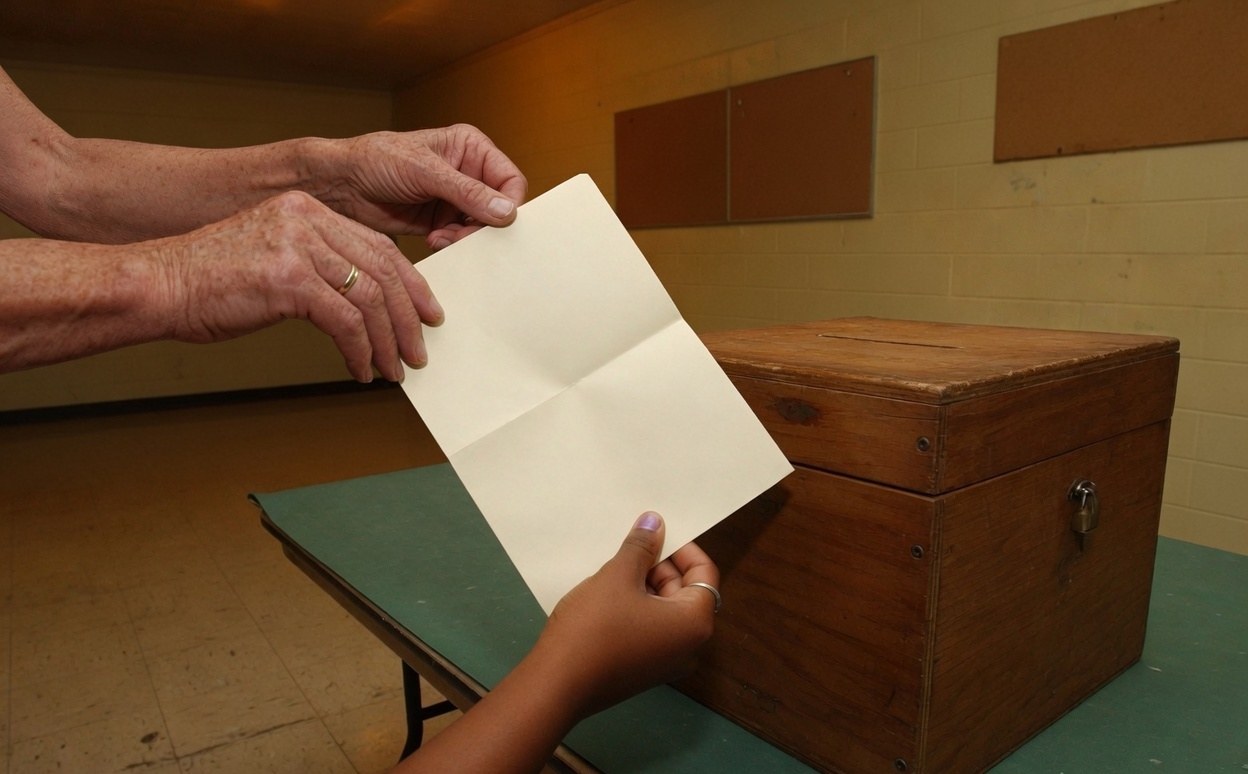
Every voter received two papers and could choose different parties on each.
- The national ballot elected the 400 members of the National Assembly.
- The provincial ballot elected the legislature of the province where the voter cast it.
Voters marked a party, not a candidate. Each party had drawn up ranked lists. The papers carried the party name, its abbreviation, its symbol, and a photograph of its leader. Nineteen parties appeared on the national ballot. Some smaller parties stood only in a province.
Inkatha’s decision on 19 April came after the papers were printed. Stickers were added at the foot of the ballots so that the party could be marked. That is why some surviving ballot papers have a sticker where the other names are printed.
26 April, then an extra day
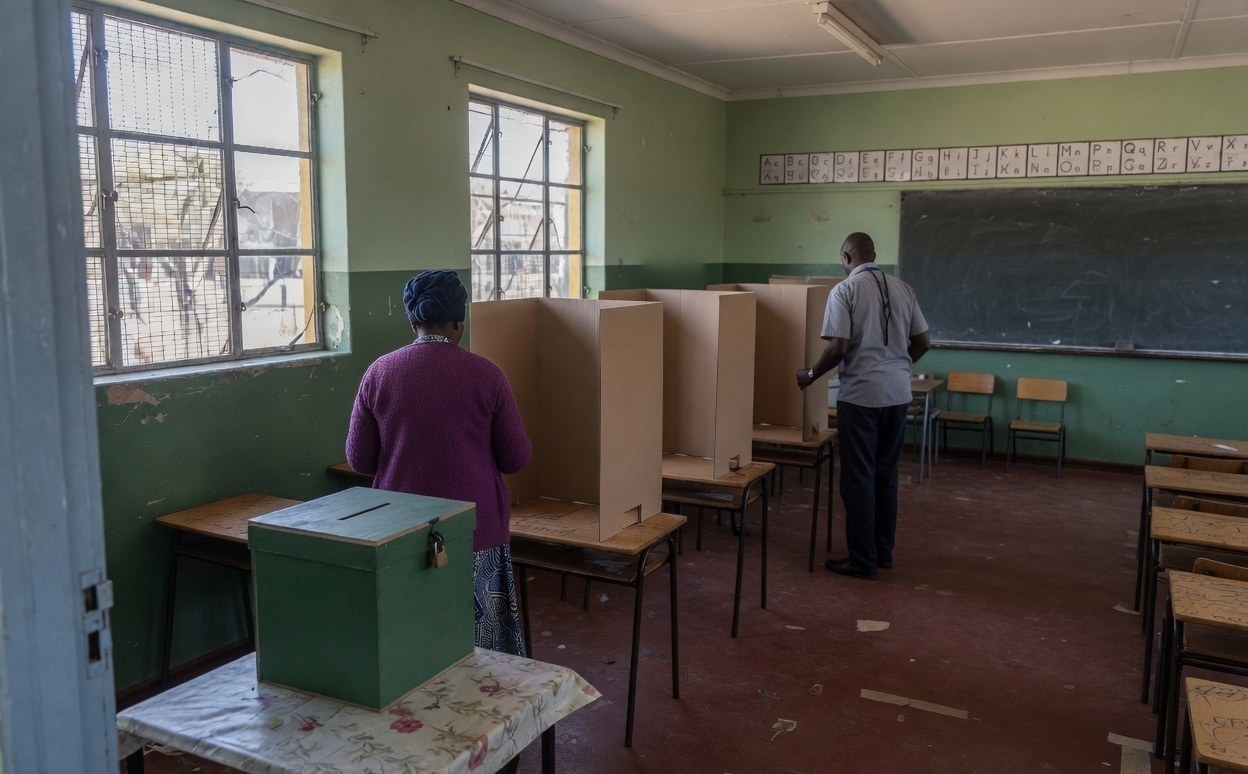
Polling was scheduled for 26, 27 and 28 April 1994. The 26th was aimed in particular at older voters, people with disabilities, and pregnant women, who would struggle in a long queue, though stations also served other voters. The 27th, now kept as Freedom Day, was the great public day of the election, and the day the interim constitution came into force. The 28th was meant to be the last day.
It was not, everywhere. Queues were enormous. Ballots and materials reached some rural stations hours late, or not at all. On 28 April Judge Johann Kriegler, chair of the temporary Independent Electoral Commission, said voters in those areas had not had a fair chance. With the agreement of political leaders and the Transitional Executive Council, voting was extended through 29 April in KwaZulu, the Transkei, the Ciskei, and the northern Transvaal territories of Lebowa, Gazankulu and Venda. Contemporary reports put the number of polling stations at about 9,000, and in some accounts nearer 10,000. The commission had to field on the order of 200,000 temporary staff.
How a vote became a seat
The National Assembly had 400 seats and no constituency members. Two hundred seats were filled from regional lists, shared among the nine provinces. Two hundred were filled from national lists. The point of the national seats was to correct the regional results, so that a party’s share of the whole house matched its share of the national vote as closely as the arithmetic allowed.
The interim constitution wrote in a proposed split of those 200 regional seats: Western Cape 21, Eastern Cape 26, Northern Cape 4, Natal 40, Orange Free State 15, North-West 17, Northern Transvaal 20, Eastern Transvaal 14, and Pretoria-Witwatersrand-Vereeniging 43. The commission could adjust the split using the data it had. There was no formal threshold. Early drafts had talked about 5 percent. That bar was dropped, which is why a party as small as the African Christian Democratic Party, with under half of one percent, still won two seats.
Inside each region the quota was the Droop quota: votes divided by seats-plus-one, then one added, fractions dropped. Seats left over went to the largest remainders. The same family of rules was used for the provincial legislatures, which together had 425 seats, sized roughly to the population of each province.
Only parties with 20 or more members of the National Assembly, 5 percent of the house, were entitled to portfolios in the government of national unity. Winning a seat and entering the cabinet were different tests.
Counting, observers, and the verdict
Counting was slow, disputed in places, and finished later than planned. The commission published the final national result on 6 May 1994. Observers from the Commonwealth, the United Nations, the Organisation of African Unity and others were spread through the country. The Commonwealth’s group was led by Michael Manley, the former prime minister of Jamaica. Their public verdict was that the election had been substantially free and fair.
That verdict sat beside a messy administration. Stations opened late. Ballot stocks failed. Accusations of cheating were widespread, and the missing roll made them hard to settle one by one. The national and provincial ballot totals do not match, which they should have done if every voter had cast both papers and both counts were perfect. The gap is one reason to treat the figures as a real result with a margin of administrative error, not as a laboratory count. The party table is on the results page.