26–29 April 1994
The election that opened the vote to everyone
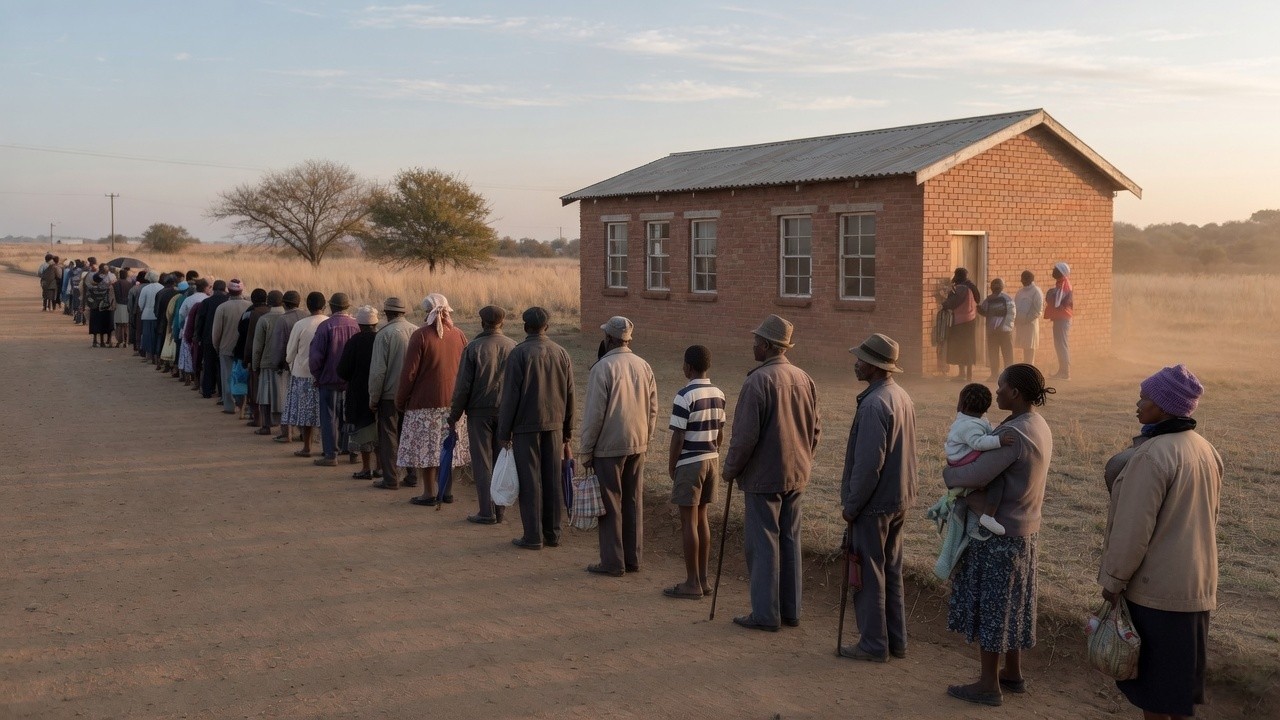
ZA is the country code for South Africa. 94 is the year it held its first election on a common franchise. For four days in April, millions of people queued to choose a parliament, and a president, for the first time together.
Start here
What the country was voting for
The election chose the 400 members of a new National Assembly and the legislatures of nine new provinces. It was not a presidential ballot. The National Assembly elected the president a few days later. On 9 May 1994 it chose Nelson Mandela. He was sworn in at the Union Buildings in Pretoria on 10 May.
The rules came from the interim constitution, agreed by negotiators in November 1993 and brought into force on 27 April 1994, in the middle of the vote. That constitution also created a government of national unity: any party with at least 20 seats could claim a place in cabinet. The ANC, the National Party and the Inkatha Freedom Party all cleared that line.
The national vote, in brief
Full resultsShare of 19,533,498 valid national votes. Percentages are rounded and can miss 100 by a tenth. Seats were even closer to those shares than a winner-takes-all system would have been. The full table, with seats.
Read the turnout figure carefully
There was no voters’ roll. The often-quoted turnout of 86.9% divides 19,726,610 counted national ballots by an approximate electorate of 22.7 million. Another estimate put the number of eligible adults nearer 21.7 million. Both can be cited. Neither is a register.
The party totals on this site are the published national figures. They sum exactly to 19,533,498 valid votes. A few secondary accounts differ by a few dozen ballots. Sources and why the small gaps exist.